.png)
Fence Cost Estimate: Price by Material, Height & Length
- Jul 12
- 4 min read
You are trying to budget a new fence, and every search result gives you a different number. That is because a fence cost estimate depends on choices you have not made yet: what material you want, how tall the fence needs to be, and how many feet you are running. A short ornamental fence around a garden and a tall privacy fence around a full backyard are both "fences," but they land in very different price ranges. This guide walks through the factors that actually move the number so you can budget with your eyes open and get an accurate quote instead of a guess.
The essentials
The three biggest drivers of a fence cost estimate are material, height, and total linear footage; change any one and the number moves.
Cheaper up-front materials like wood often cost more over time once you add staining, repairs, and replacement.
Taller and more private fences use more material per foot, so a solid 6-ft privacy run costs more than a low open picket line.
Post spacing matters: a system that spans wider uses fewer posts and less labor than one that needs a post every few feet.
The only way to get a real number is to share your length, height, and material; Modern Yard builds every infill on one myPost system and can estimate accordingly.
How material choice drives the price
Material is usually the first thing that sets the ceiling and floor of your budget. Wood is inexpensive to buy but carries ongoing costs: it needs staining or sealing, it can warp or rot, and it eventually needs replacement. Wrought iron looks classic but rusts and demands upkeep. Aluminum and steel cost more at purchase but hold their finish and skip most of the maintenance, which changes the math over a decade of ownership.
Instead of thinking only about the sticker price, weigh the lifetime cost. A material that never needs staining and resists rust and corrosion can be the cheaper choice by year five, even if it costs more on day one.
Modern Yard offers three infills, each with a different look and purpose:
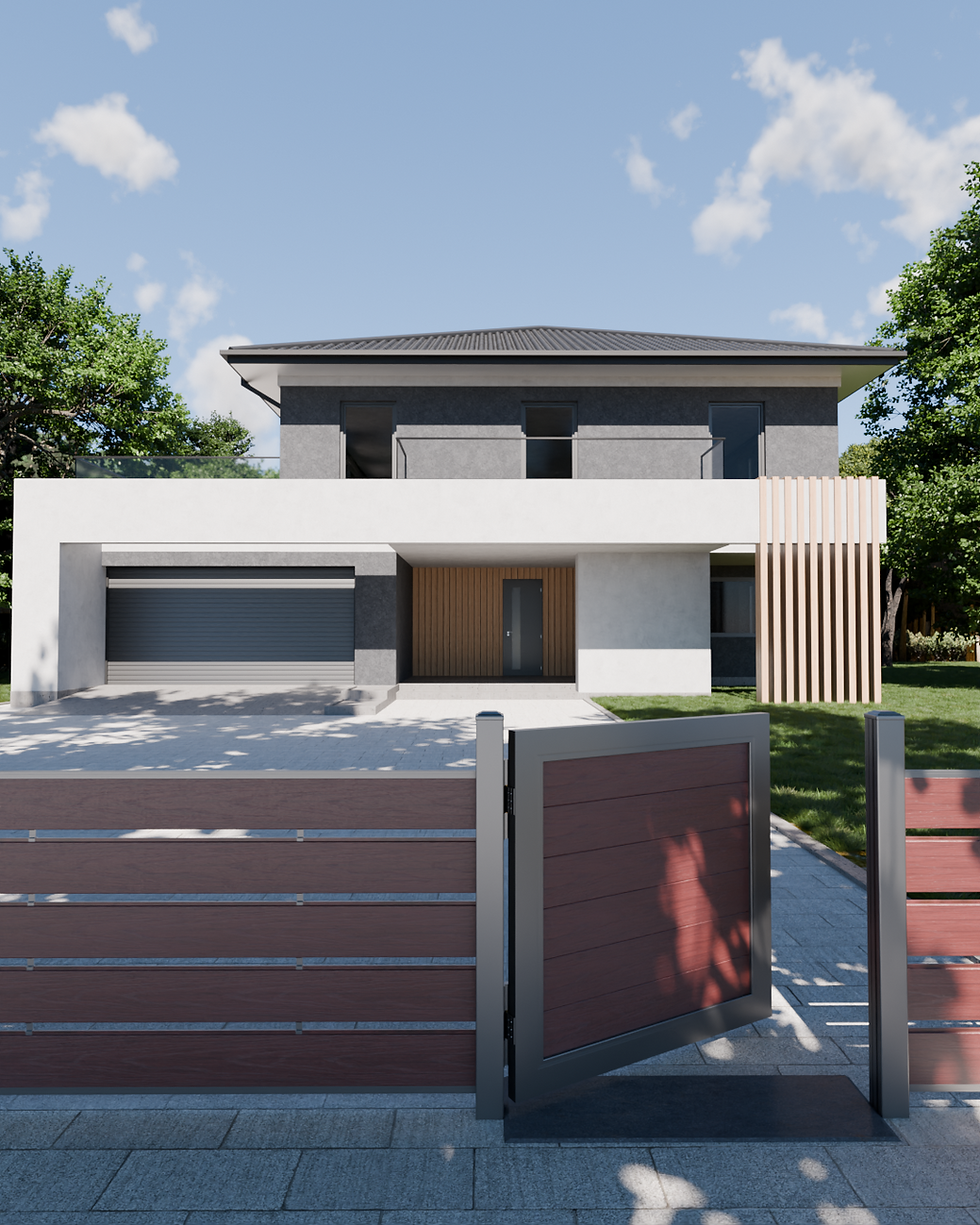
myRedwood is a wood-look composite that gives the warm appearance of wood without the repainting cycle.
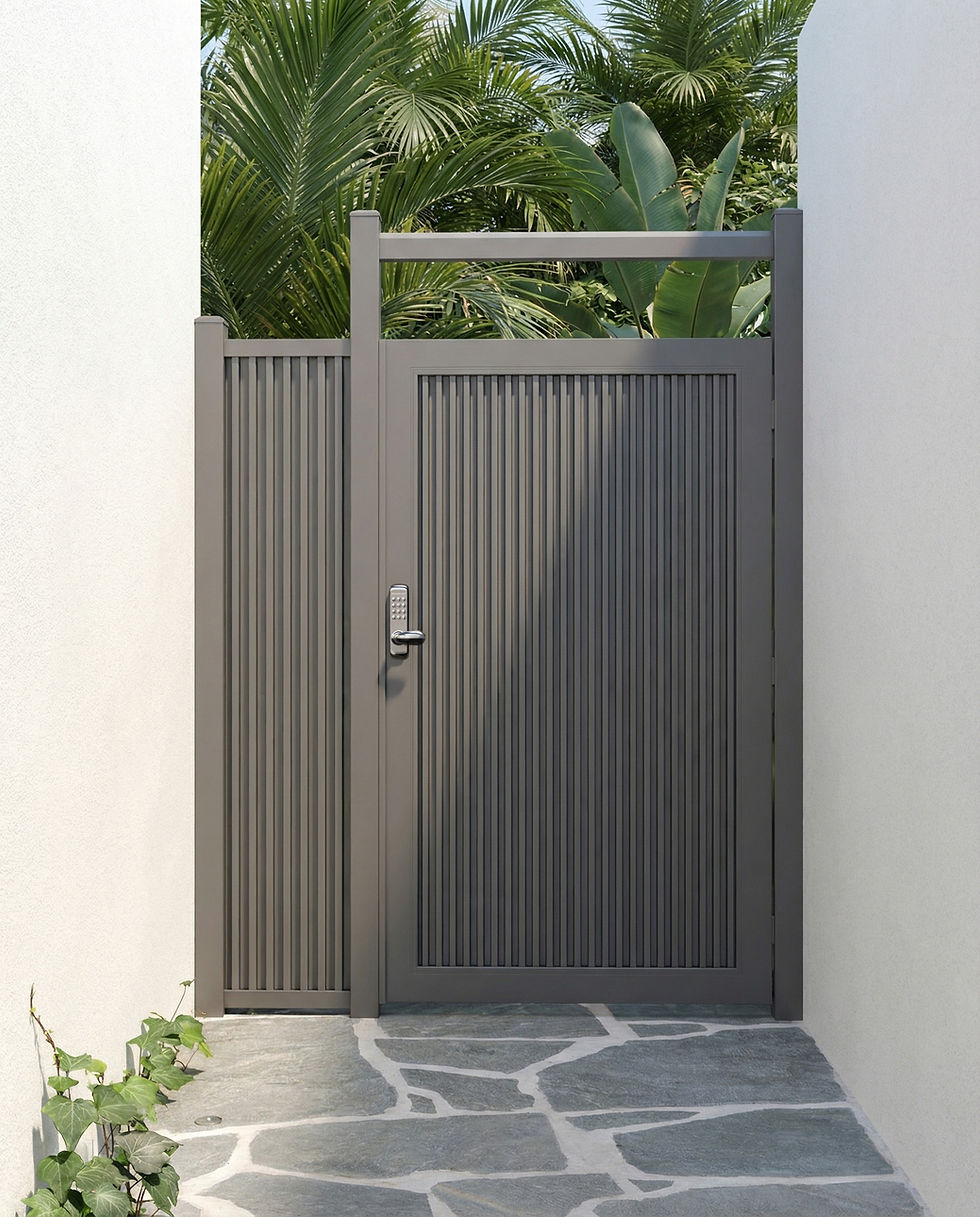
Air™ is an aluminum slat fence with a diamond-shaped louver profile, finished with electrostatic powder coating over an epoxy primer so it resists chipping, fading, and corrosion.
myFireGuard is a fire-resistant steel infill for homeowners who want added protection in fire-prone areas.
Because all three mount to the same universal myPost, you can compare them on equal footing when you build your estimate.
How height and privacy change the number
Height is the factor people underestimate. A fence is priced largely by material used, and a taller fence uses more material per linear foot. A low, open picket line meant to define a garden bed uses far less than a tall privacy screen designed to block sightlines from a neighbor's second story.
Privacy level works the same way. An open ornamental style leaves gaps and uses less material. A full-privacy panel is denser and costs more per foot. A louvered profile like Air™ sits in a useful middle ground: it blocks direct views while letting air and light through, so you get privacy without the solid-wall cost of some alternatives.
When you plan your budget, decide the height first. Local codes may also set limits or requirements, especially around pools and front yards, so confirm those before you settle on a number.
How length and layout affect labor and materials

Total length is the multiplier. Every extra foot adds material, and most layouts also add labor. But two runs of the same length are not always the same price, because the layout underneath matters.
Post count is a hidden cost driver. A system that requires a post every few feet means more holes to dig, more hardware, and more labor. A system that spans wider covers the same distance with fewer posts. Air™ spans up to 8 ft wide, which uses about 25% fewer posts than a typical 6-ft system, so you dig fewer holes and pay for less post hardware over a long run.
Corners, gates, and slopes add cost too. Each gate is its own hardware and labor line, and uneven ground can require stepped or custom sections. When you measure, count your gates and note any slopes so your estimate reflects the real yard, not a flat rectangle.
It also helps to think about the site itself. Rocky or root-filled ground slows down post setting, and a yard with limited access for equipment can add labor. None of these change the material you pick, but they shape the final number, which is why a walked and measured layout beats an online average every time.
Frequently asked questions
What is the biggest factor in a fence cost estimate?
Material sets the range, but height and total length determine where you land inside it. A tall privacy fence in a premium material over a long run is the most expensive combination; a short open fence in a basic material is the least. Change any one factor and the estimate moves.
Is a cheaper material always the better budget choice?
Not always. Low up-front materials like wood often cost more over time once you add staining, repairs, and eventual replacement. A finish-holding material like powder-coated aluminum can be less expensive across the life of the fence even if it costs more to install.
Does a taller fence cost more per foot?
Yes. Height adds material to every linear foot, so a 6-ft privacy fence costs more per foot than a low open one. Privacy density adds cost the same way, which is why open styles are cheaper than solid panels.
How can I lower my fence cost without cutting quality?
Choose a material that skips ongoing maintenance, and pick a system with wider post spacing so you pay for fewer posts and less labor. Confirming your exact length and height up front also prevents costly mid-project changes.
Get a quote
The fastest way to turn a rough budget into a real fence cost estimate is to share three things: your total fence length, the height you need, and the material you want. Modern Yard builds myRedwood, Air™, and myFireGuard on the same universal myPost system, so you can compare options for your exact layout and get an accurate estimate instead of a range.