
How to Build a Composite Fence on a Slope
Updated: Aug 30
A sloped yard changes how a composite fence needs to be laid out, but it doesn't necessarily make the installation complicated.
There are two common ways to handle the change in elevation: stepped installation and racked installation.
With the Modern Yard™ Composite Fence System, the right approach also depends on whether the composite boards are installed horizontally or vertically.
Horizontal Composite Fence: Stepped or Racked
Vertical Composite Fence: Stepped

Horizontal Composite Fence on a Slope
The Modern Yard™ Horizontal Composite Fence System can be installed using either method.
Option 1: Stepped Installation

For a stepped installation, build each fence section level using the standard Horizontal Composite Fence System components.
When the elevation changes, move the next section up or down rather than changing the angle of the fence section itself.
No additional slope-specific hardware is required.
The important detail is post length. As the fence moves up or down the slope, longer posts may be required to maintain adequate in-ground post depth.
What You May Need: Longer Posts
Option 2: Racked Installation

A racked installation works differently.
Instead of stepping each section, the horizontal rails and composite boards follow the slope.
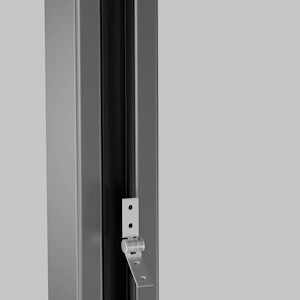
The standard Horizontal Rail Kit uses 90° connectors. For a racked installation, replace these connectors with Modern Yard™ Adjustable Angle Connectors.
The adjustable connectors allow the rails to meet the posts at the angle required by the slope.
Additional Component: Adjustable Angle Connector

What About a Vertical Composite Fence on a Slope?
For the Modern Yard™ Vertical Composite Fence System, we recommend a stepped installation.

Unlike the Horizontal Composite Fence System, the vertical system does not use an adjustable rail connector for racked installations.
When the ground slopes, a treated wood kickboard can be cut to follow the grade and create a level base for the vertical fence section above.
Modern Yard™ Kickboard Adapters connect the kickboard to the fence system and are designed for 1.5-inch actual-thickness treated wood, commonly sold as nominal 2-inch lumber.
What You May Need:
Longer Posts
1.5" actual-thickness treated wood kickboard
Kickboard Adapters


Composite Fence Slope Installation at a Glance
Fence System | Installation Method | What Changes |
Horizontal Composite | Stepped | Longer posts may be required |
Horizontal Composite | Racked | Replace 90° connectors with Adjustable Angle Connectors |
Vertical Composite | Stepped | Longer posts and/or a treated wood kickboard may be required |
Before You Start
Don't choose stepped or racked installation based only on how steep the yard looks.
Measure the elevation change across the fence line first and consider the width and height of each fence section, required post embedment, soil conditions and applicable local codes.
For larger elevation changes, a stepped layout may be more practical. For a gradual and consistent slope, a racked horizontal fence can create a continuous line that follows the terrain.
One Composite Fence System, Different Terrain
A composite fence doesn't have to be limited to flat ground.
The key is choosing the installation method before setting the posts. Horizontal composite fencing gives you the option to step the sections or rack them with Adjustable Angle Connectors, while vertical composite fencing can use a stepped layout with a kickboard solution where needed.
Plan the elevation changes first, select the appropriate components, and then build the fence around the conditions of the site—not the other way around.
Planning a composite fence project? Explore the Modern Yard™ Composite Fence System, installation guides, and components to find the right setup for your site.