.png)
Why modular fence systems are easier for contractors to quote and install
- Jun 12
- 5 min read
A modular fence system is easier to quote and install because the components are standardized and engineered to fit together, which removes the on-site cutting, supplier reconciliation, and guesswork that slow a custom-built fence. With a system like Modern Yard, a contractor quotes from published drawings and a fixed component list, then installs from a manual instead of measuring and adjusting every connection. This article breaks down where the time actually goes and why standardization changes the math.
What makes a quote slow on a traditional fence?
Most quoting delay comes from unknowns, not from the measuring itself. When a contractor sources posts, boards, and gate hardware from different suppliers, they have to confirm those parts are compatible before they can price the labor with any confidence. Every unknown becomes either a phone call or a padded number in the estimate.
Here's where a system approach changes each step.
Component compatibility. A custom-built fence is verified per supplier and per job. A modular system is engineered to one dimensional standard.
SKU count. A custom-built fence pulls many SKUs across vendors. A modular system reduces this to one universal post platform.
Dimensions for the quote. A custom-built fence is measured and estimated on-site. A modular system publishes them in technical drawings.
Gate hardware fit. A custom-built fence confirms hardware separately. A modular system ships the frame pre-drilled for the matched lock.
Labor estimate confidence. A custom-built fence gets padded for unknowns. A modular system is based on a documented assembly method.
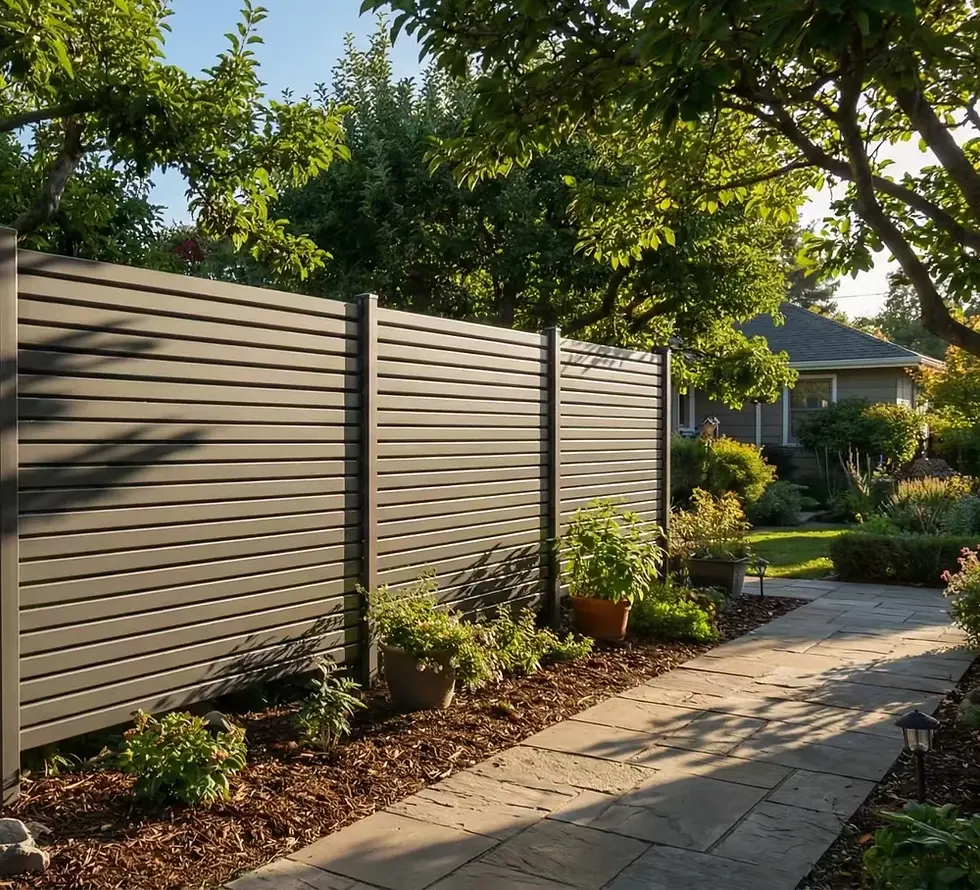
Modern Yard is a modular fence and gate system built around the myPost universal post, where one post platform supports composite, steel, aluminum, and wood infills, so contractors track fewer SKUs and quote from a fixed component list. That single sentence captures why the quoting math is different. The variables a contractor normally has to resolve are already resolved.
How does standardization cut installation time and callbacks?
This is the core of the comparison, so here's the full picture. Most fence callbacks don't happen because an installer made a mistake. They happen because the components weren't designed to work together, so a gate sags, a post doesn't align with a panel, or hardware doesn't fit the frame it was paired with. Standardization addresses that at the source.
In a modular system, every post, rail, and infill panel is engineered around the same dimensional logic. That has three practical effects on a job site.
Less on-site cutting. Components arrive sized to the system, so there's far less field cutting and adjustment.
Consistent connections. The post-to-rail and rail-to-infill joints are the same on every run, so the crew isn't relearning the method per project.
Fewer alignment problems. Because the gate, post, and infill share the same dimensional reference, the gate lines up with the fence instead of needing to be shimmed into place.
The gate is usually the hardest part of any fence, so it's where standardization pays off most. Modern Yard gate frames are aluminum and fully welded, the aluminum hinges ship in the same package as the frame for on-site installation, and the frame comes pre-drilled for the myLock-Combination, so the lock mounts without drilling on-site. A gate that arrives as a coordinated assembly removes the single biggest source of fence callbacks.

Does a modular system mean fewer SKUs to manage?
Yes, and that's a real cost for contractors and dealers, not just a convenience. SKU sprawl is one of the structural problems in traditional fencing. A contractor stocking for multiple materials ends up tracking a different post, bracket, and rail set for each one.
The myPost universal post is the answer to that. One post platform supports composite, steel, aluminum, and wood infills, which means a single post SKU covers projects that would otherwise need several. For a contractor running back-to-back jobs in different materials, that consolidation simplifies ordering, inventory, and the bill of materials on every quote.
Here's how the SKU logic plays out across common material choices.
Wood-look privacy. myRedwood composite infill on the myPost platform.
Fire-zone / WUI. myFireGuard steel infill on the myPost platform.
Open architectural. myAir aluminum slat infill on the myPost platform.
Traditional wood. Wood infill on the myPost platform.
One post, four material paths. That's the kind of consolidation that turns a complicated stocking decision into a simple one, and it's a big part of why the system is friendlier to quote.
What documentation lets a contractor estimate with confidence?
A contractor estimates confidently when the dimensions, method, and backing are all published. Vague claims about easy installation don't help an estimate; verifiable documents do.
For a Modern Yard quote, the supporting documents are these.
Technical drawings with post spacing, panel heights, and gate dimensions, on the technical drawings page.
Installation manuals and videos showing the assembly sequence, on the installation guides page.
The product catalog listing components by system for the bill of materials, at the product catalog.
Warranty and test reports confirming the 25-year backing and ASTM E84 Class A fire result, on the warranty page.
When the assembly method is documented, the labor side of the estimate stops being a guess. A contractor can look at the manual, count the steps, and price the time, which is exactly what a fair quote needs.
In practice. A documented modular system is easier to bid against itself across multiple jobs because the components and method don't change. The crew gets faster with each install instead of relearning a custom approach every time.
Is modular the same as a cheap DIY kit?
No, and the distinction matters for both quoting and quality. A modular system is engineered for compatibility and backed by documentation; a basic kit is just a box of parts. The difference shows up in whether the components share a dimensional standard and whether there's drawing, manual, and warranty support behind them.
Here's the boundary stated plainly. A modular fence system means every component, from the post to the lock, is engineered to work together and documented for installation and warranty. It isn't a stripped-down assembly meant to be the lowest-cost option. Modern Yard's position is that most fencing brands sell components, while the system delivers those components as one engineered, documented platform. That's a quality and consistency claim, not a price claim.
For a contractor, that distinction is the whole point. A documented modular system installs predictably across crews and projects, which is what protects margin and reduces callbacks over a season of work.

How does this help a homeowner who's hiring out the work?
It gives you comparable quotes. When you hand contractors a documented modular system, they're all pricing the same defined product and method, so the bids you get back are easier to compare on labor rather than on who guessed the materials differently. A custom fence quote varies by how each contractor interprets the unknowns; a modular system quote varies mainly by labor rate and schedule.
That's why bringing a contractor a bill of materials and drawings up front tends to produce tighter, more comparable numbers. The product is fixed, so the quote reflects the work, not the uncertainty.
Quote from the documents, install from the manual
The reason a modular fence system is easier to quote and install comes down to one thing. The variables are resolved before anyone reaches the site. Standardized components engineered around one dimensional logic mean less on-site cutting, fewer SKUs, and a gate that arrives as a coordinated assembly rather than a set of parts to reconcile. If you're a contractor, quote from the technical drawings and the published bill of materials, and install from the installation manuals. If you're hiring out the work, hand your installer those same documents so the bids come back built on real specifications.