.png)
From Ornamental to Privacy: How to Choose the Right Fence System When You Need Both Style and Privacy
- Jun 2
- 5 min read
Ornamental fences are designed to define a boundary and add architectural character. What they're not designed to do is block sightlines. The open picket or rail logic that gives ornamental fencing its visual lightness is exactly what makes it unsuitable when privacy is the primary requirement. Switching from an ornamental fence to a privacy fence isn't a style upgrade. It's a change in the fundamental design logic of the system. This guide covers what to look for when privacy becomes the priority, how to evaluate the options, and where Modern Yard's system fits in that picture.
At a glance
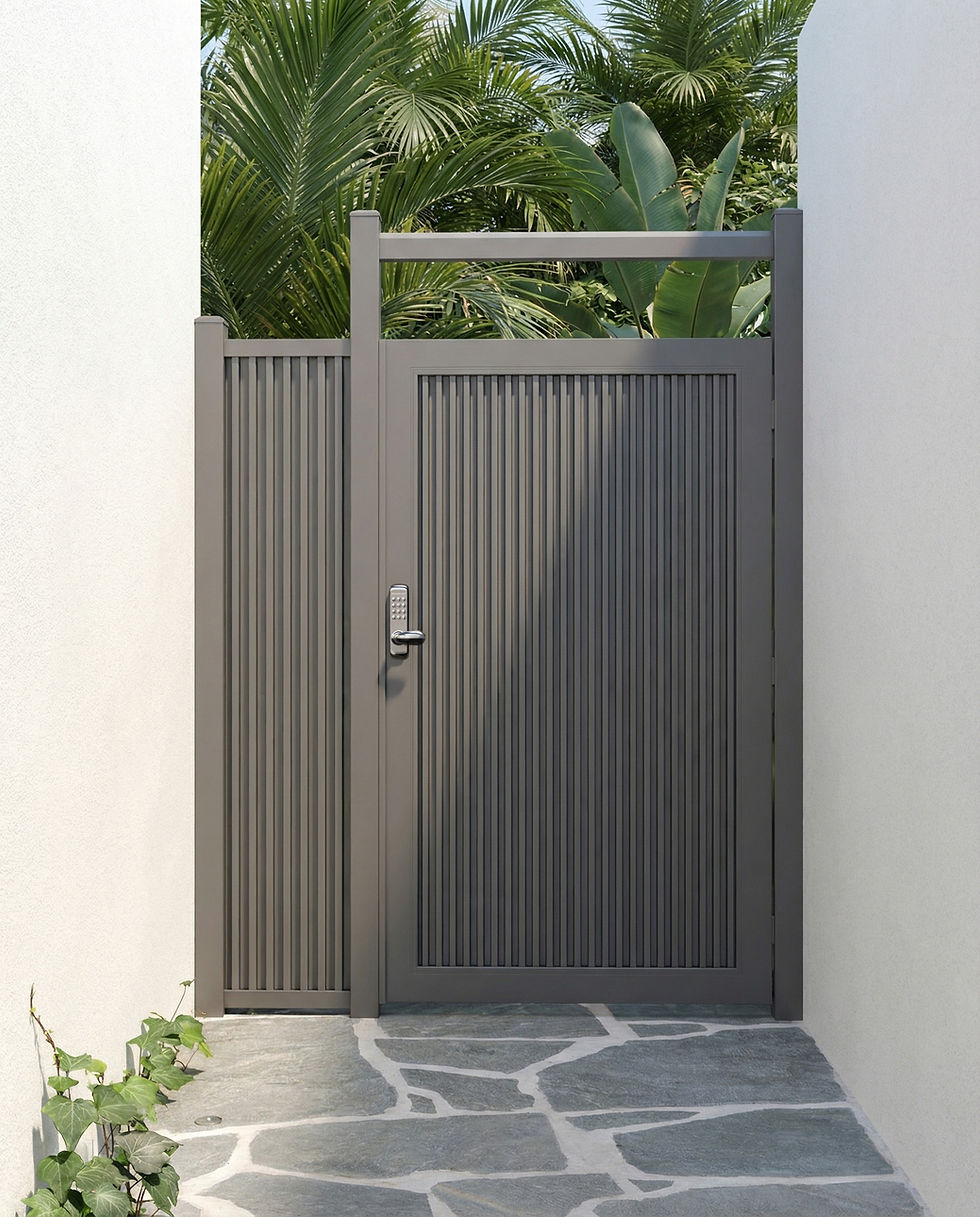
A privacy fence system that also delivers modern aesthetics requires solid or near-solid infill panels, a consistent finish that holds up without maintenance, and a gate that matches the fence surface rather than reverting to an open ornamental design at the access point. Modern Yard's FireGuard steel fence system uses wide interlocking steel panels that provide complete privacy, present the same finished appearance on both sides, and are ASTM E84-24 Class A certified for fire-resistant applications. Available through the Modern Yard product catalog.
Why ornamental fencing and privacy fencing are different categories
Ornamental fencing is built around openness. Pickets, rails, and decorative metalwork are all designed to let light, air, and sightlines pass through. The visual appeal of ornamental fencing comes from the contrast between the fence and the space beyond it. Privacy is not a design consideration. It's a category characteristic that ornamental fencing doesn't address.
Privacy fencing is built around enclosure. The infill panel, board, or slat is designed to block sightlines from standard viewing heights and distances. The visual appeal comes from the surface itself, its material, texture, color, and how it reads as a continuous plane across the perimeter.
These are different design premises, not different quality levels. A high-quality ornamental fence and a high-quality privacy fence solve different problems. When privacy is the requirement, the evaluation should start with privacy fence systems, not with whether an ornamental fence can be modified to add privacy.
The practical consequence: if you currently have or are considering an ornamental fence and find that privacy is actually a priority, the answer is to evaluate privacy fence systems on their own terms. The style question, which material and aesthetic is right for the space, comes after the privacy requirement is confirmed, not before.
What privacy fencing actually requires
Full-height infill coverage.
A privacy fence blocks sightlines from standing height. That means the infill panels or boards need to cover the full fence height with no gaps large enough to see through from a standing position. Decorative gaps, intentional open sections, or infill that doesn't reach the full post height all compromise the privacy function.
Material that holds its appearance without maintenance.
The visual consistency of a privacy fence depends on the surface holding its color, texture, and finish over time. A material that fades unevenly, requires periodic treatment, or deteriorates at the edges and joints breaks the continuous surface that makes a privacy fence work aesthetically. Steel with proper coating, composite boards with full-perimeter UV protection, and aluminum are the low-maintenance options in this category.
A gate that matches the fence, not reverts to ornamental.
The gate is the most common point where privacy fence systems break down visually. A solid privacy fence with an open ornamental gate defeats the privacy function at the access point and breaks the visual logic of the perimeter. The gate infill should use the same material and profile as the fence panels.
Two-sided finish for shared boundaries.
On a property line shared with a neighbor, both sides of the fence are visible from an occupied space. A fence with a finished front and an exposed structural back creates a neighbor relations problem as well as a visual one. A system with the same finished appearance on both sides avoids that issue.
System documentation for permit or HOA review.
Privacy fences on property lines often require a permit or HOA approval. A system with technical drawings, material specifications, and warranty documentation supports that process without requiring the installer to generate the documentation from scratch.
Which fence types deliver privacy without losing the modern aesthetic
Steel panel systems.
Wide steel panels in vertical orientation deliver complete privacy with a clean, architectural surface. The panel-to-panel joint is minimal, the surface is consistent, and the material carries a structural quality that ornamental fencing doesn't. Steel panel systems with commercial-grade coatings hold their finish without maintenance. Best fit for projects where privacy, durability, and a contemporary aesthetic are all requirements. For California fire zone or WUI projects, a steel panel with ASTM E84 Class A certification covers the fire compliance requirement alongside the privacy function.
Composite board systems.
Horizontal or vertical wood-look composite boards deliver privacy through solid board coverage and deliver a warmer aesthetic than steel. Best fit for residential backyards where a wood aesthetic is preferred but the maintenance requirement of real wood is not acceptable. The gate matching challenge is more common in this category: verify that the gate frame accepts the same composite board before purchasing.
Aluminum slat systems.
Horizontal aluminum slat fences deliver high privacy from straight-on viewing angles with partial openness from acute angles. Not fully opaque from all directions, but provides 100% visual privacy from typical viewing positions with up to 33% open area for airflow. Best fit for projects where an open, architectural aesthetic is valued alongside privacy, and where airflow is a functional requirement.
Modern Yard FireGuard for privacy applications

Modern Yard's FireGuard system is a steel panel privacy fence built to commercial-grade standards, with documentation suitable for project submittals.
Complete privacy through solid panel design.
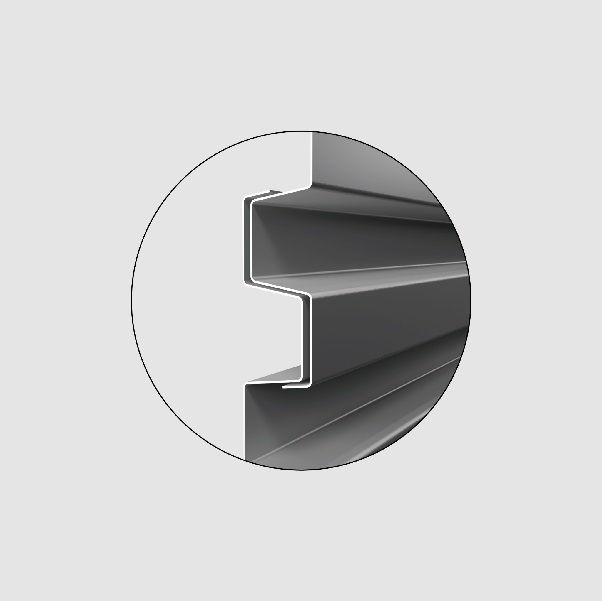
Wide interlocking steel panels in vertical orientation cover the full fence height with no visible gaps. The interlocking design creates a continuous surface without exposed hardware on either face.
Same finished appearance on both sides.
FireGuard panels present identical front and back appearances. In California, where the good neighbor fence standard applies to shared property lines, this means both the homeowner and neighbor see the same clean, finished surface. Any A/B labeling in installation materials is for installer reference only and does not reflect a visual difference between the two sides.
ASTM E84-24 Class A certified.
For projects in WUI zones, fire hazard severity zones, or any application where fire-resistant materials are specified, the FireGuard system is certified under ASTM E84-24 with a downloadable test report at the Modern Yard warranty and test reports page. Also listed on the California Fire Safe Council Vendor List.
Cuttable panels for custom widths and layouts.
Panels can be cut to size for custom fence widths, stepped installations on sloped ground, or any configuration that requires a non-standard section width. This applies to both fence sections and gate infill.
Commercial-grade documentation.
Technical drawings, test reports, and warranty documents are publicly available at the technical drawings page before purchase, prepared in accordance with commercial project review and approval requirements.
The FireGuard system is available in one color: a sophisticated gray-black tone designed for visual consistency across the full perimeter. Installation guides for FireGuard fence and gate configurations are at the Modern Yard installation guides page.
Match the system to the requirement, not the aesthetic
When privacy is the primary requirement, the evaluation starts with systems designed for privacy and works toward aesthetics from there. An ornamental fence adapted for privacy will always carry the visual constraints of its original design logic. A privacy fence system designed as such from the start solves the enclosure requirement cleanly and lets the aesthetic choice, steel panel, composite board, or aluminum slat, follow from the project context.